
- October 13, 2026
- Baila Guttman
Every year, the first week the sun sets before dinner, people say the same thing: my house feels cold. Not temperature-cold. Feeling-cold. And the honest truth? By January, there’s very little styling can do about it — because winter doesn’t expose your decorating. It exposes your design.
Here is what winter teaches you about a house:
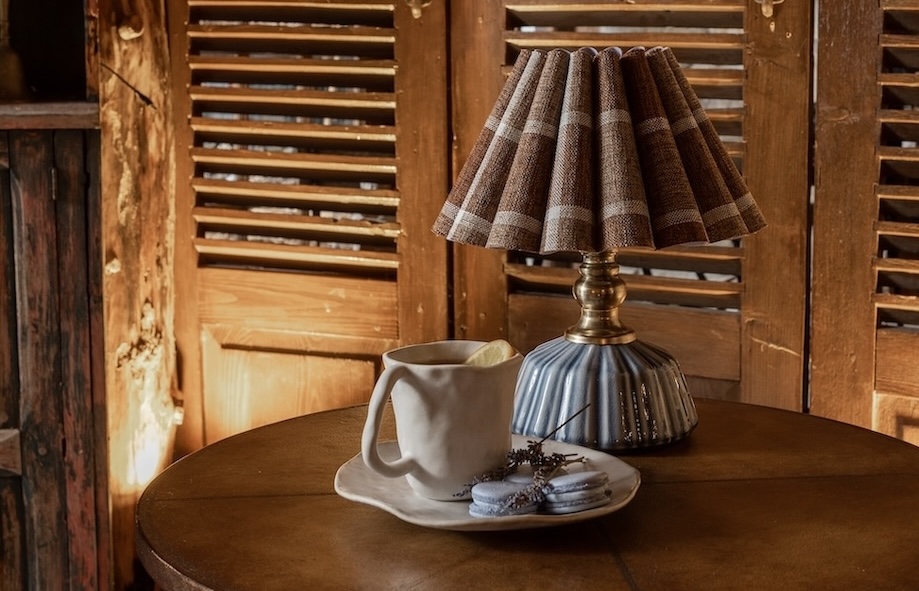
Winter exposes the lighting plan. One ceiling light that felt fine in July feels like an office in December. Warm, layered light — sconces on the walls, fixtures on dimmers, light at the height of the people in the room — isn’t something you shop for. It’s something that gets wired in when the walls are open. Homes that feel golden in winter were designed to.
Moody is an architectural decision. Deep, rich color reads depressing in a room that was never meant for it — and reads like a cocoon in a room designed around it: the right proportions, the right light, a palette chosen as a whole. Winter is when you find out which one you built.
Real warmth is built in. Millwork with depth to it, stone, real wood, plaster — materials with texture hold warmth in a room before a single pillow arrives. The styling we finish a home with can only complete a feeling the architecture started — it can’t invent one.
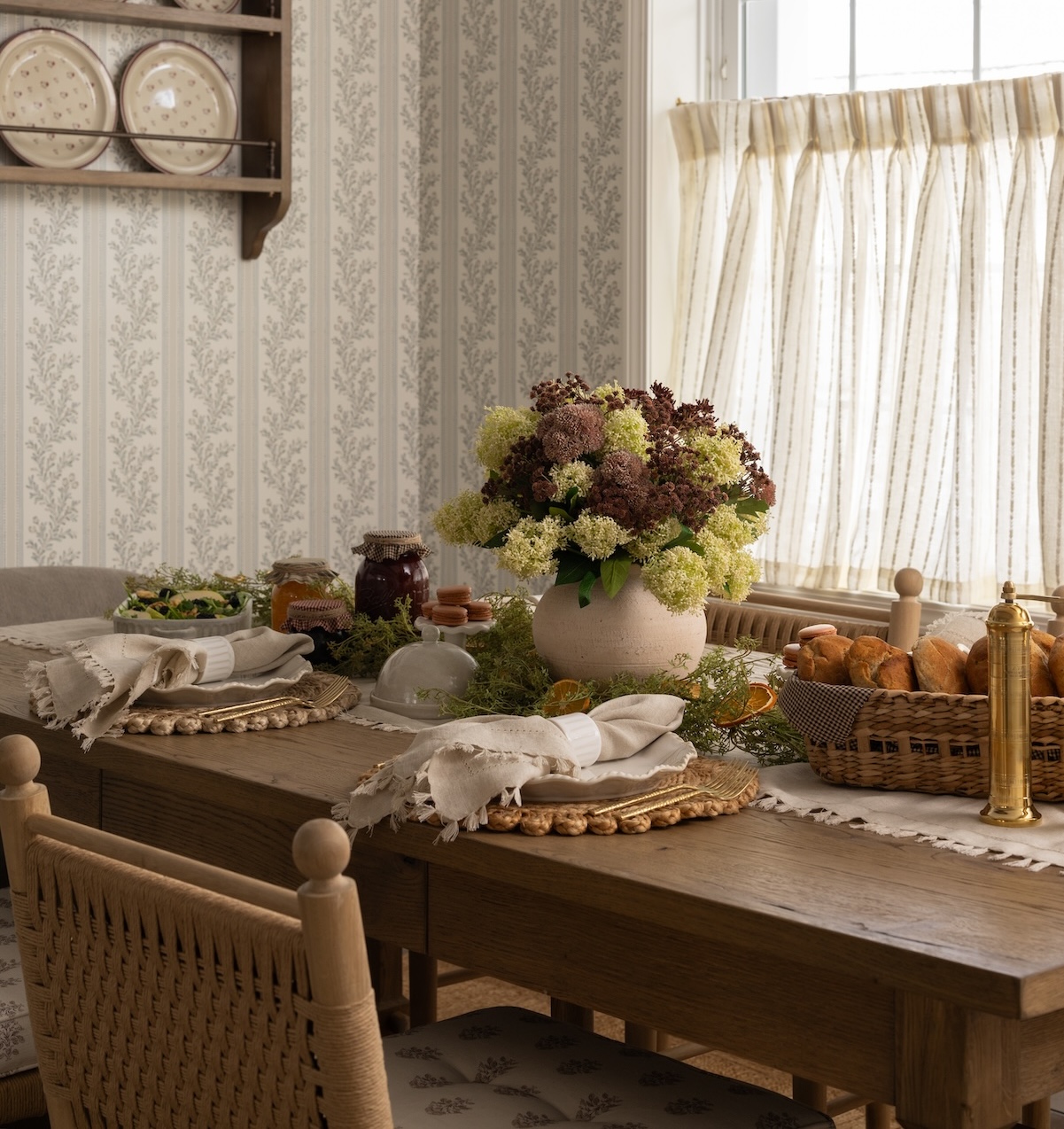
Winter is when layout proves itself. The longest nights, the longest meals, everyone around one table for hours. A dining room sized for the fully extended table, a kitchen that seats the crowd instead of exiling it — that’s not furniture placement. That’s the floor plan, doing its job in February.
We design houses — layout, light, materials, and the styling that finishes them — so winter is never a problem to fix. It’s the season the house was made for.
— Baila